
How Does Binance's New Exchange Perform? A Comprehensive Look at Features, Security, and User Experience

Binance, as one of the world's leading cryptocurrency exchanges, rarely makes a move without industry-wide attention. The launch of a new exchange under its ecosystem naturally raises a critical question: How does Binance's new exchange actually perform? To answer this, we need to break down the concept of "new" in this context. This could refer to a new dedicated platform for a specific region, a revamped version of the existing interface, or a completely separate trading venue with unique token listings and fee structures.
At its core, the performance of any new exchange hinges on three pillars: liquidity, security, and user experience. Binance leverages its massive existing liquidity pool. When a new exchange is launched, it often connects to the same order books or utilizes a shared liquidity network. This means that from day one, users are unlikely to face the thin order books and high slippage that plague smaller, independent startups. For traders, this immediate depth of market is a significant advantage, allowing for large trades to be executed without major price impact.
Security is another paramount factor. Binance has learned from past industry incidents and typically integrates its established Security Asset Fund for Users (SAFU) into its new platforms. Furthermore, new exchanges often come with enhanced two-factor authentication (2FA), anti-phishing codes, and cold wallet storage protocols. However, the user should note that a "new" exchange might also introduce experimental features or new smart contract interactions. While Binance's internal audits are usually thorough, users are advised to maintain good personal security hygiene, such as whitelisting withdrawal addresses and using separate API keys for trading bots.
From a feature perspective, these new exchanges often target specific market gaps. For instance, a new exchange might focus on high-frequency trading with ultra-low latency, or it might prioritize the listing of innovative, small-cap projects that cannot meet the strict listing criteria of the main Binance platform. This creates a unique value proposition. Users looking for the next breakout token might find these new platforms more appealing, while traditional spot traders might stick with the main exchange for its stability and familiarity.
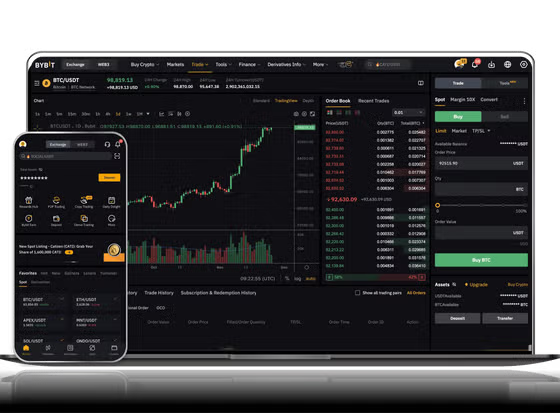
User interface (UI) and user experience (UX) are also key differentiators. Newer platforms often adopt a cleaner, more modern aesthetic with improved charting tools powered by TradingView or proprietary engines. They may also introduce features like copy trading, grid trading bots, or launchpad integrations directly within the new interface. This reduces the friction of switching between multiple applications. One common critique of older, feature-heavy exchanges is the overwhelming amount of information on the screen. A new exchange often solves this by offering a streamlined, beginner-friendly mode alongside an advanced professional mode.
Regulatory compliance is the final, often overlooked piece. A new exchange might be Binance's strategic move to operate within a specific regulatory framework—for example, a platform licensed in a particular country with strict KYC (Know Your Customer) requirements. This ensures the platform's longevity and reduces the risk of sudden shutdowns due to legal pressures. For users in those regions, this regulated new exchange offers a safer, more reliable gateway to digital assets compared to unregulated offshore platforms.
In conclusion, the performance of Binance's new exchange is generally robust, benefiting from the parent company's scale, security infrastructure, and technical expertise. It is not merely a copy of the existing platform but often a tailored solution targeting specific user needs—whether that is lower fees, access to early-stage tokens, or regulatory compliance. Potential users should evaluate the specific features, supported assets, and jurisdictional restrictions of the new exchange against their own trading habits. While the brand name provides a baseline level of trust and reliability, due diligence on the unique mechanics and fee schedule of the specific new platform remains essential for optimal trading outcomes.


发表评论