
How to Operate on Binance, OKX, and Bybit: A Practical Guide for Top Crypto Exchanges

The cryptocurrency ecosystem is vast, but for most traders, the focus narrows down to a few major platforms. When users search for terms like "binance币安吧" or "三大交易所如何操作," they are typically looking for actionable steps on using the world’s top three exchanges: Binance, OKX, and Bybit. Understanding how to navigate these platforms is crucial for both beginners and seasoned investors. This guide provides a clear, practical walkthrough of core operations on each exchange.
First, let’s address the most common entry point: Binance. Known for its extensive product suite, Binance is often the first exchange a new user encounters. The core operation begins with registration. You need a valid email or phone number. After registration, critical security steps must be taken: enable two-factor authentication (2FA) via Google Authenticator or SMS, and set up anti-phishing codes. For funding your account, the most common method is depositing cryptocurrency. Navigate to "Wallet," then "Spot," and find "Deposit." Copy your deposit address or scan the QR code. Do not send the wrong token to the wrong network—always confirm the network type (e.g., BEP20, ERC20). Spot trading is straightforward: go to the "Markets" tab, select a pair like BTC/USDT, and place a Limit (buy at a specific price) or Market (buy at the current price) order.
Moving to OKX, the exchange is highly popular for its robust trading features and Web3 wallet. The operational flow is similar but with key differences. After account creation and KYC (Know Your Customer) verification, you should explore the "Trade" section. OKX excels in derivatives and copy trading. To start futures trading, you must transfer funds from your Funding account to your Trading account. Beginners should start with the "Simple Futures" mode to avoid liquidation risks. The platform also offers a unique "Jumpstart" section for staking and earning yields on idle assets. A common question in "三大交易所如何操作" involves withdrawals: on OKX, go to "Assets," select "Withdraw," and whitelist your withdrawal address for security. The process is designed to be smooth, but network fees vary, so always check the withdrawal fee displayed on the screen.
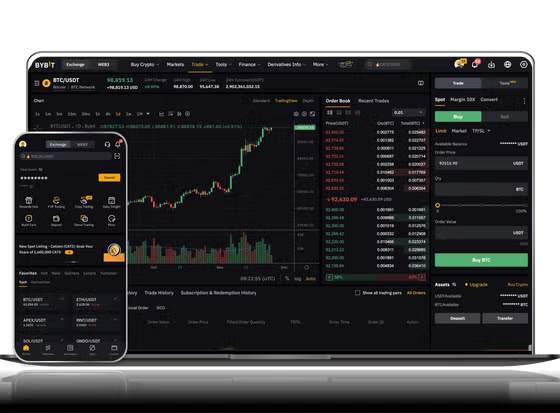
Finally, Bybit distinguishes itself with a focus on derivatives and user experience. While its spot trading functionality is present, Bybit is primarily known for its perpetual contracts. The key operational step here is understanding leverage. To trade on Bybit, you first deposit funds (USDT is most common). Then, open the "Derivatives" tab. You must select your leverage (e.g., 5x, 10x, 20x). Crucially, the "Isolated" vs. "Cross" margin mode determines your liquidation risk. For beginners, "Isolated" is safer. The platform also features a "Unified Trading Account," which simplifies margin management across spot and futures. One unique operational tip for Bybit: use the "Stop Loss" and "Take Profit" tools directly in the order entry. This automates risk management. The platform's interface is often praised for being less cluttered than Binance, making it easier for new futures traders to focus on price action.
A common thread across all three exchanges—Binance, OKX, and Bybit—is the importance of API management. Many advanced users connect their accounts to trading bots or portfolio trackers. To operate an API, go to the security section of each platform, create a new API key, and restrict its permissions (e.g., only enable "Reading" and "Trading," never "Withdrawals"). This is a fundamental security practice. Additionally, all three platforms now enforce mandatory KYC for higher withdrawal limits and compliance. Users asking "三大交易所如何操作" must understand that skipping KYC severely limits functionality.
In summary, operating on the top three exchanges requires a methodical approach. Start with Binance for its liquidity and education resources; use OKX for its comprehensive Web3 integration and fixed-income products; and leverage Bybit for its efficient derivatives trading interface. Regardless of the platform, master the fundamentals: secure your account with 2FA, understand network fees before transferring funds, and always backtest any trading strategy with small amounts first. The goal is not just to log in, but to operate with confidence and security.


发表评论