
How to Operate on Binance and Similar Crypto Exchanges: A Step-by-Step Guide for Beginners

Cryptocurrency exchanges like Binance have become the primary gateway for millions of users to trade digital assets, from Bitcoin and Ethereum to thousands of altcoins. Understanding how to operate on these platforms is essential for anyone looking to buy, sell, or trade crypto. Whether you are a complete beginner or a seasoned trader, the process generally follows a structured workflow: registration, verification, funding, and trading.
The first step to operating on exchanges like Binance is creating an account. Navigate to the official website or download the mobile app. You will need to provide a valid email address and create a strong password. Most reputable exchanges, including Binance, require identity verification (KYC - Know Your Customer) to comply with global regulations. This usually involves uploading a government-issued ID (such as a passport or driver’s license) and completing a facial recognition check. Verification may take anywhere from a few minutes to several hours.
Once your account is verified, the next critical operation is funding your wallet. Exchanges offer two primary methods: depositing fiat currency (like USD, EUR, or GBP) or depositing cryptocurrency from another wallet. For fiat deposits, you typically link a bank account, credit card, or use a third-party payment provider. For crypto deposits, you navigate to the "Deposit" section, select the specific cryptocurrency (e.g., USDT or Bitcoin), and copy the unique deposit address. Always double-check the deposit address and network to avoid losing funds. Never send tokens from a different blockchain than the one specified.
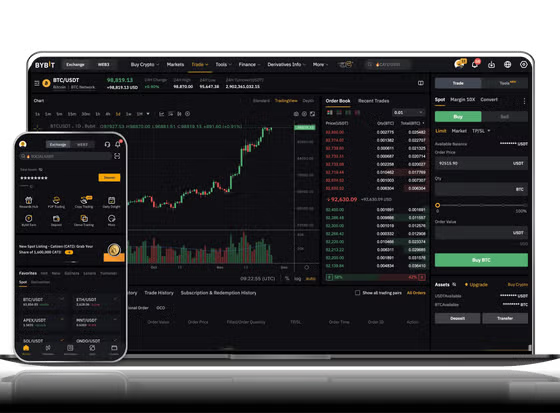
After your funds arrive, you can begin trading. The most common interface is the "Spot" trading page, which shows a price chart, an order book, and a trading pair (e.g., BTC/USDT). There are several order types to understand: - **Market Order:** Buys or sells instantly at the current market price. - **Limit Order:** Sets a specific price at which you want to buy or sell. The order will only execute if the market reaches that price. - **Stop-Limit Order:** A conditional order triggered when the price hits a certain "stop" level, after which a limit order is placed. This is useful for risk management.
For example, if you want to buy Bitcoin at a lower price than current, you would place a limit order. If you want to sell quickly to take profits or cut losses, a market order is faster. Advanced operations on Binance also include margin trading (borrowing funds to amplify gains), futures trading (betting on price direction with leverage), and staking (earning interest by locking up certain coins). However, beginners should start with basic spot trading until they fully understand the risks.
Another crucial aspect of operating an exchange is security. Enable Two-Factor Authentication (2FA) using an app like Google Authenticator or Authy. Never share your API keys, withdrawal passwords, or recovery phrases. Be wary of phishing emails or fake websites pretending to be Binance. Additionally, for long-term holdings, consider withdrawing your assets to a hardware wallet like Ledger or Trezor, as exchanges can be vulnerable to hacks or outages.
Finally, remember that exchanges like Binance offer a "Fiat and Spot" wallet for trading balances, a "Funding" wallet for purchases and staking, and often a "Futures" wallet for derivatives. Transferring funds between these wallets is free and instant. To extract profits or move crypto, use the "Withdraw" function. Note that withdrawals incur network fees (gas fees), which vary depending on the blockchain congestion and the asset being sent.


发表评论